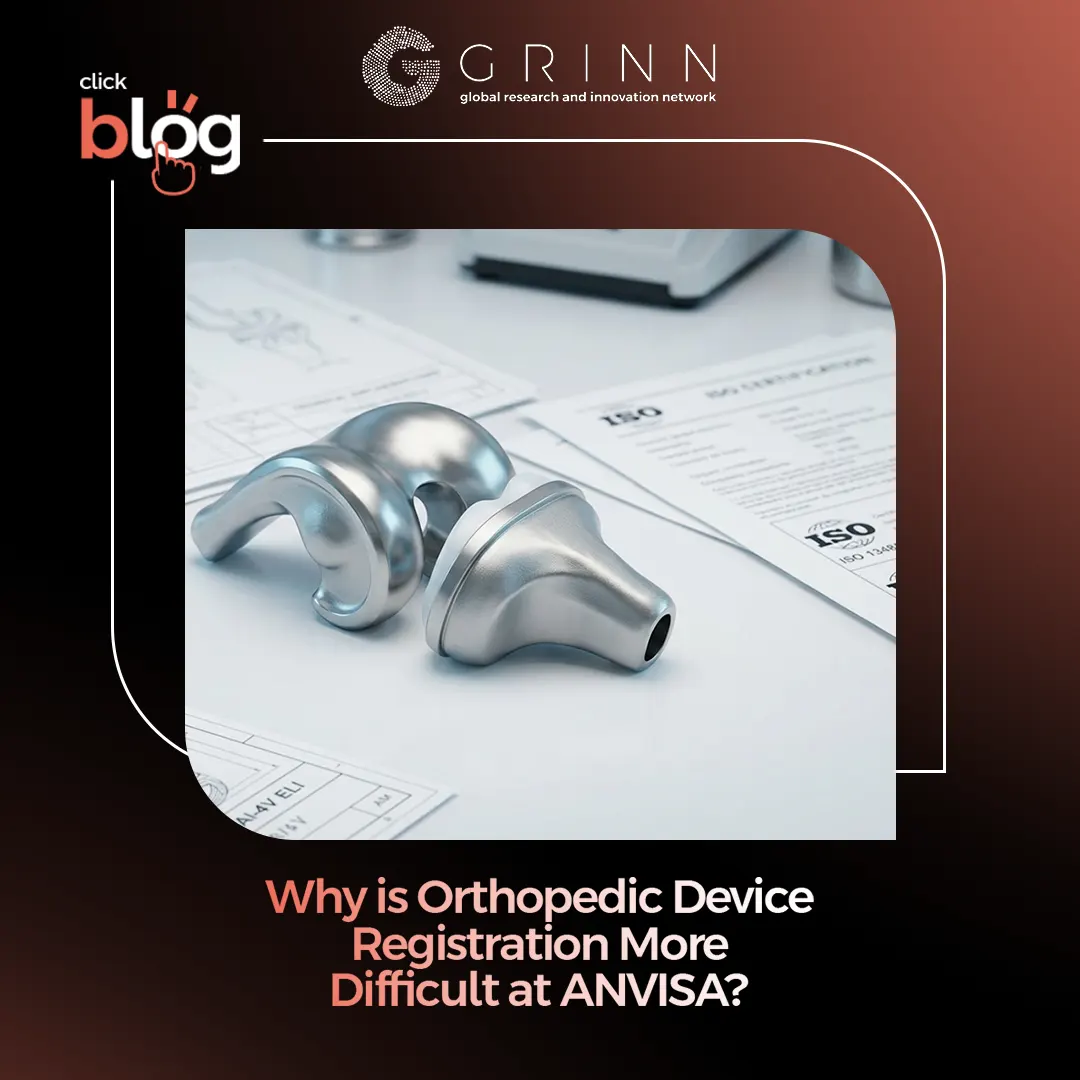
Critical factors increasing regulatory stringency and their impact on approval timelines.
Navigating the Brazilian regulatory landscape for medical devices is one of the greatest strategic challenges for manufacturers and importers. When the focus shifts to orthopedic devices, ANVISA?s stringency reaches its peak. With the implementation of RDC 751/2022?which updated risk classification and submission requirements?the demand for robust clinical evidence and risk management has become even more central.
Understanding why the registration of these products is considered one of the agency's most complex processes is fundamental to avoiding the "cost of delay" in launching new technologies. Below, we explore the factors that make this journey challenging and how technical compliance is the only path to approval.
High Risk and Patient Safety
Orthopedic devices, especially implants, are inserted directly into the human body and can affect vital functions. Therefore, ANVISA requires a higher-than-normal level of safety and efficacy, implying a more rigorous evaluation process. It is necessary to evaluate not only the device itself but also the materials used, the manufacturing processes, and the clinical studies that prove its safety and effectiveness. Furthermore, any defects or failures in orthopedic devices can cause serious health complications for patients, such as infections, implant rejection, and the need for revision surgeries.
Documentation Complexity
The registration process for an orthopedic device, much like any other medical device, requires the submission of a vast amount of documentation, including pre-clinical studies, clinical trials, test reports, technical drawings, and instructions for use (IFU). ANVISA requests these documents to guarantee the product's safety, efficacy, and quality before commercialization. In this context, the organization and quality of the documentation are crucial for registration approval.
Technical Challenges
Regarding orthopedic device registration at ANVISA, the process is more demanding due to the high risk associated with these products and the technological complexity involved, requiring an extremely rigorous assessment of scientific evidence for safety and efficacy.
Regulatory Support and Guides
To facilitate the registration process, ANVISA?alongside the Brazilian Industrial Development Agency (ABDI) and the Brazilian Micro and Small Business Support Service (Sebrae)?developed the "Manual for Orthopedic Implant Registration at Anvisa." This technical guide aims to guide manufacturers and importers through the regularization and registration process in Brazil. It explains how to comply with current health legislation, particularly ANVISA Resolution RDC No. 185/01.
The manual details the steps for regularizing orthopedic implants, including obtaining the Company Operating Authorization (AFE), the Sanitary License (Alvará Sanitário), and compliance with Good Manufacturing Practices (GMP). Additionally, it covers product risk classification, technical registration requirements, and specifications for necessary documentation, such as clinical studies and test reports.
Strategic Planning and Updates
That said, it is essential to start the registration process for an orthopedic device well in advance, as ANVISA?s analysis can extend for several months due to the complexity and volume of documentation required. Starting early allows for the identification of potential gaps or inconsistencies in the dossier, enabling corrections before final submission and reducing the risk of delays or rejections.
Furthermore, it is vital for manufacturers and responsible parties to stay constantly updated on health legislation, which is in continuous evolution. Monitoring regulatory changes ensures that documentation and products are always in compliance with the latest requirements, increasing the efficiency of the registration process and the likelihood of approval by the regulatory body.
How Grinn Can Help
The registration of an orthopedic device does not have to be an obstacle to your innovation. At Grinn, we are specialists in translating ANVISA?s regulatory complexity into efficient submission strategies, ensuring that your technical documentation and clinical studies are aligned with the highest global demands.
We know that each device has unique characteristics and that the Brazilian regulatory framework requires precise navigation to avoid rejections or prolonged requests for information (exigências).
Do you have questions about your registration process or need specialized support for your technical dossier? Send an email to: contact@grinn.co and speak directly with our specialists. Let's accelerate the arrival of your technology to market together.
Our technical and strategic team is available to analyze your project. Send an email to contact@grinn.co and speak directly with our specialists. Together, let?s accelerate the arrival of your technology to the market.